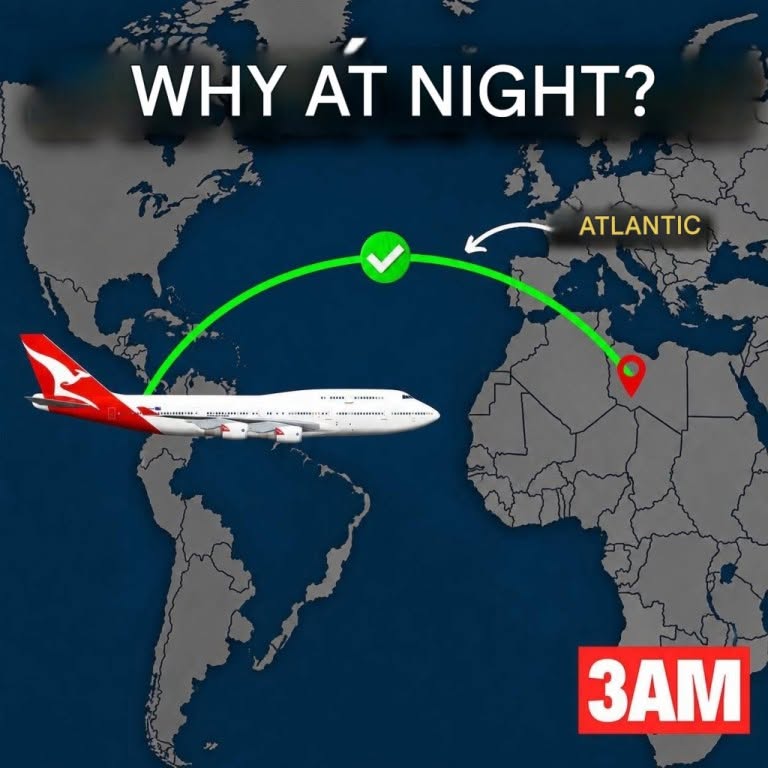
The Atlantic Has a “Traffic Pattern”
The North Atlantic is one of the world’s busiest long-distance aviation corridors.
Because so many aircraft use the same general region, flights don’t simply scatter randomly across the ocean. Airlines and air-traffic controllers organize traffic into routes known as North Atlantic Tracks, or NAT tracks.
These routes are adjusted according to factors such as weather, winds, and traffic demand.
And here’s the fascinating part:
The main traffic flow changes depending on the time of day.
Flights heading east from North America toward Europe are concentrated overnight, while flights traveling west from Europe toward North America are concentrated during daylight hours.
So the Atlantic isn’t empty during the day.
It’s simply much busier in one direction.